
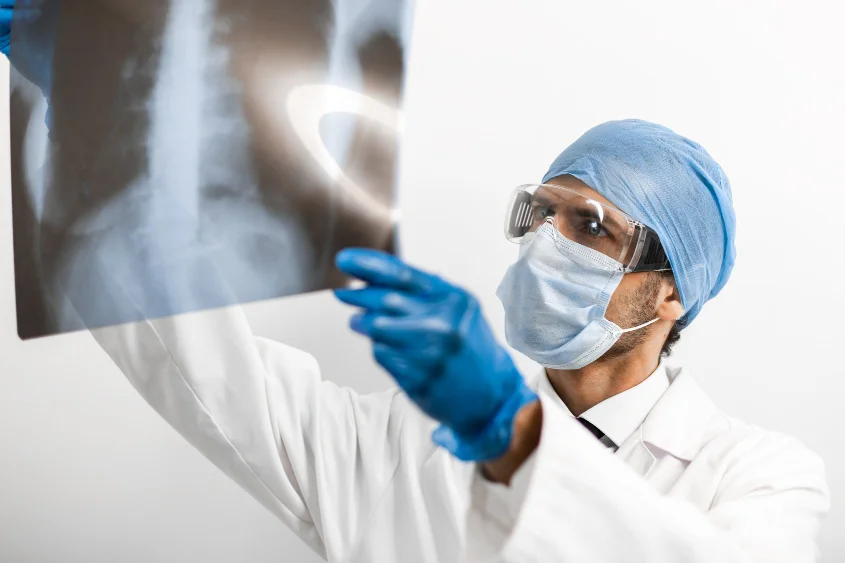
X-rays have been an essential part of medical diagnostics for over a century, helping doctors identify fractures, infections, lung diseases, and internal organ abnormalities. However, concerns about radiation exposure have always been a topic of discussion. With advancements in digital X-ray technology, modern imaging techniques now provide higher accuracy with significantly lower radiation exposure, making X-rays safer than ever.
In this blog, we’ll explore how modern digital X-rays reduce radiation risks, their benefits over traditional X-ray methods, and how they continue to be an indispensable tool in medical diagnostics.
Understanding X-ray Radiation: Is It Harmful?
X-ray imaging works by passing low-dose ionizing radiation through the body to create detailed images of bones, organs, and tissues. While exposure to high doses of radiation over time can be harmful, modern digital X-rays use significantly lower radiation levels, ensuring patient safety.
The amount of radiation exposure from an X-ray is minimal and comparable to natural background radiation we encounter in daily life. For instance, a chest X-ray exposes you to the same amount of radiation as a short airplane flight. Digital technology has further improved safety by reducing the need for repeated exposures, making X-rays an extremely low-risk diagnostic tool.
How Digital X-rays Reduce Radiation Exposure
1. Lower Radiation Doses with Digital Technology
Unlike older film-based X-rays that required higher doses of radiation to produce clear images, modern digital X-ray machines use advanced sensors that require much less radiation while providing sharper, more detailed images.
2. Faster Imaging Reduces Repeated Exposures
With digital X-rays, images are captured instantly and displayed on a screen within seconds. This means that fewer repeat scans are needed, significantly reducing overall radiation exposure.
3. Enhanced Image Quality for Better Diagnosis
Digital X-ray systems produce high-resolution images with better contrast and clarity, making it easier for doctors to detect fractures, lung conditions, and soft tissue abnormalities accurately. This reduces the likelihood of misdiagnosis or unnecessary additional scans.
4. Safer for Pregnant Women & Children
Although X-rays are generally avoided during pregnancy, modern digital X-ray technology uses lower doses of radiation, making them safer for children and necessary cases in pregnant women where imaging is unavoidable. Protective lead shields are also used to minimize exposure to sensitive areas.
5. Environmentally Friendly & Efficient
Traditional X-ray film required chemical processing, which was time-consuming and environmentally harmful. Digital X-rays eliminate the need for chemicals, making them more eco-friendly while ensuring faster report delivery and electronic storage for easy access.
Are X-rays Really Safe? Understanding the Radiation Levels
X-ray radiation exposure is measured in millisieverts (mSv). To put things into perspective, here’s how common X-ray procedures compare to natural radiation exposure:
Chest X-ray – 0.1 mSv (equivalent to 10 days of natural background radiation)
Dental X-ray – 0.005 mSv (less than 1 day of natural background radiation)
Abdomen X-ray – 0.7 mSv (about 3 months of natural background radiation)
CT Scan (higher exposure than X-ray) – 1.5 to 7 mSv (depending on the scan area)
As you can see, a single X-ray exposes you to very little radiation, making it a safe and effective diagnostic tool when medically necessary.
Common Myths About X-ray Radiation
Myth 1: All X-rays Are Dangerous
Reality: Modern digital X-rays use very low doses of radiation, and the risk of harm is negligible, especially when performed occasionally and under medical guidance.
Myth 2: X-rays Cause Cancer
Reality: The radiation dose from a single X-ray is too low to cause cancer. The risk of developing health problems from an X-ray is far lower than the risk of missing a serious medical condition due to lack of diagnosis.
Myth 3: Pregnant Women Should Never Get X-rays
Reality: While X-rays should be avoided during pregnancy unless absolutely necessary, modern digital X-ray machines minimize radiation exposure. When required, protective shielding is used to ensure the safety of both mother and baby.
Myth 4: There Are Safer Alternatives to X-rays for Bone Injuries
Reality: While MRI and ultrasound are useful for soft tissue imaging, X-rays remain the best and most efficient method for detecting fractures, joint issues, and lung conditions.
When Do You Need an X-ray?
Doctors recommend X-rays for a variety of reasons, including:
- Bone Fractures & Joint Injuries – Helps detect broken bones, dislocations, and arthritis.
- Lung & Chest Conditions – Essential for diagnosing pneumonia, tuberculosis, and lung infections.
- Dental & Jaw Problems – Used for cavity detection, wisdom teeth assessment, and jaw alignment.
- Digestive & Abdominal Issues – Helps identify kidney stones, gallstones, and intestinal blockages.
- Routine Screenings & Check-ups – Sometimes used to track chronic conditions like osteoporosis.
If your doctor has recommended an X-ray, it means the benefits far outweigh any minimal risks, ensuring a faster and more accurate diagnosis.
How to Stay Safe During an X-ray?
Although modern digital X-rays are safe, here are a few ways to ensure even lower radiation exposure:
- Inform your doctor if you’re pregnant – Alternative imaging methods like ultrasound or MRI may be recommended if necessary.
- Use protective shielding – Lead aprons are provided to shield non-targeted body areas from radiation.
- Follow instructions carefully – Staying still during the X-ray prevents the need for repeat scans.
- Only get X-rays when medically necessary – X-rays should only be performed when prescribed by a doctor for diagnosis.
Final Thoughts
X-rays remain an essential and life-saving diagnostic tool in modern medicine. Thanks to digital imaging advancements, radiation exposure is now significantly lower, making X-rays safer and more efficient than ever. Whether diagnosing a fracture, lung infection, or abdominal condition, X-rays help doctors make faster, more accurate medical decisions, ensuring timely treatment.
At Dr. Choudhari’s Vedanta Diagnostics, we use state-of-the-art digital X-ray technology, providing high-quality imaging with minimal radiation exposure, ensuring both safety and accuracy in every scan.